The most common mistake in a surprise proposal is not the speech or the timing. It is the box. A traditional hinged ring box is roughly a two-inch cube, and that cube prints through a jacket or trouser pocket like a warning sign. Slim ring boxes exist to solve exactly that problem, trading the domed velvet clamshell for a flat profile that disappears in a pocket. They are a genuinely better tool for a secret proposal, but they come with one tradeoff worth understanding before you buy, because a box that is too thin for the ring creates a different problem at the worst possible moment.
Why the classic box gives you away
The dimension that matters for concealment is height, the measurement that stands up off your leg or chest. A classic display box runs around 45 millimeters tall, close to an inch and three quarters, because it is designed to present a ring upright under showroom lights, not to hide. A slim proposal box collapses that same footprint down to something like 19 millimeters, well under half the height, by laying the ring flatter and trimming the lid. That single change is the difference between an obvious bulge and a box that reads as a phone or a wallet through fabric.
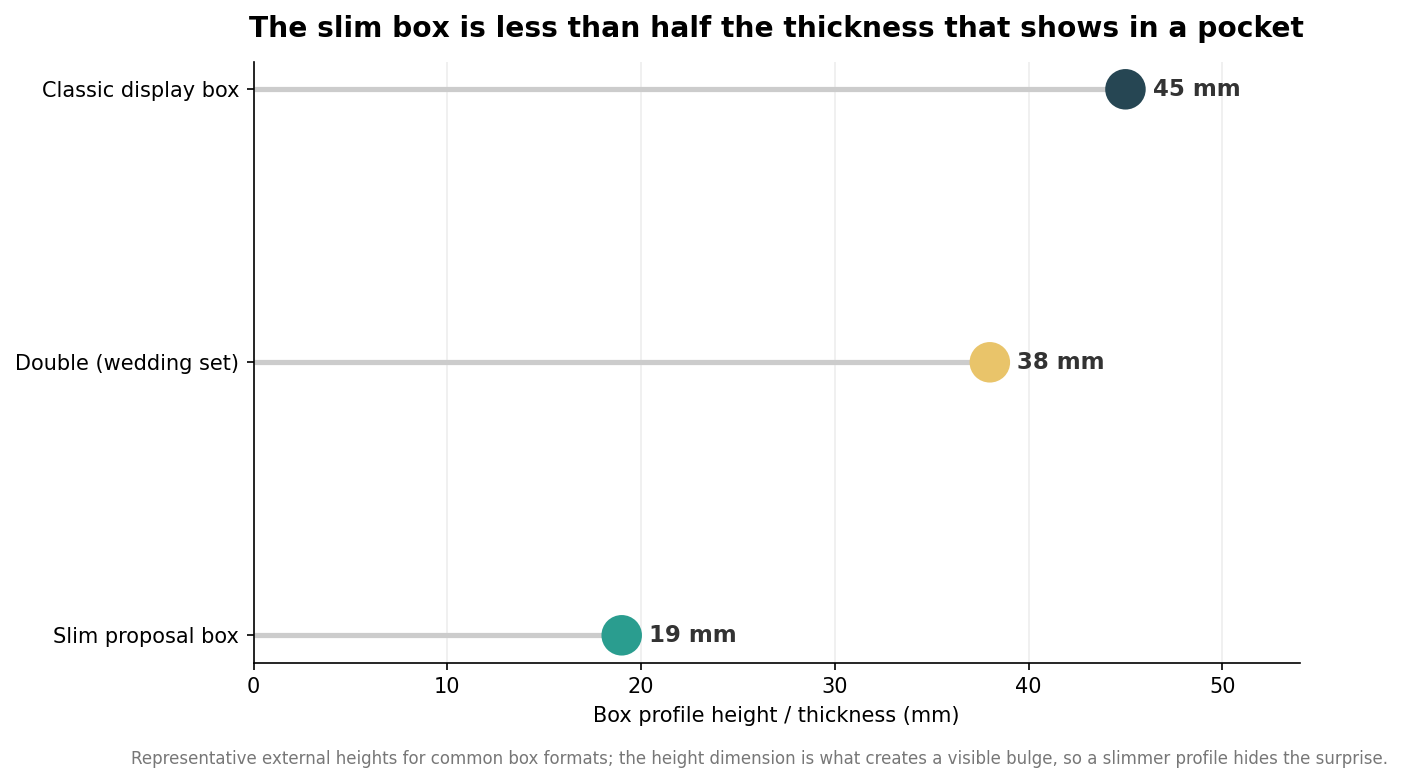
Footprint helps too. Slim boxes keep the length and width modest, often near a two-inch square or a slightly longer flat rectangle, so they slide into an inside jacket pocket or even a front trouser pocket without pulling the fabric taut. If total invisibility is the goal, the flat rectangle shapes tend to hide better than squares because they follow the line of a pocket rather than doming out of it.
The tradeoff nobody mentions: tall stones and slim boxes
Here is the catch. To get thin, a slim box gives up interior height, and interior height is exactly what a tall setting needs. A good ring box leaves roughly 12 millimeters of air between the top of the stone and the lid so the gem is never crushed or scratched when the box closes, and a box meant to hold an upright solitaire may need to be around 45 millimeters tall internally to do that. A high-set solitaire, a tall cathedral setting, or a big center stone can simply be too tall to sit upright inside a slim box.
The workaround that slim boxes use is to seat the ring on its side or lay it flatter rather than standing it up, which is fine for many rings and awkward for a few. Before you commit to the slimmest option, measure your actual ring from the base of the band to the top of the stone, add the headroom, and confirm the box’s internal height clears it. A slim box that holds a modest band beautifully can pinch a three-carat cathedral setting, so the ring, not the pocket, should have the final say on how thin you can go.
Material changes how much room you actually have
External dimensions lie a little, because the walls take their cut before the ring ever gets inside. A thin plastic shell might use walls around 1.5 millimeters and a paperboard box around 2 millimeters, while a solid wood box can run 5 to 8 millimeters of wall on every side. That wood feels wonderful in the hand and looks the part on a shelf, but it can shrink the usable internal space by something like a third compared with what the outside measurements suggest.
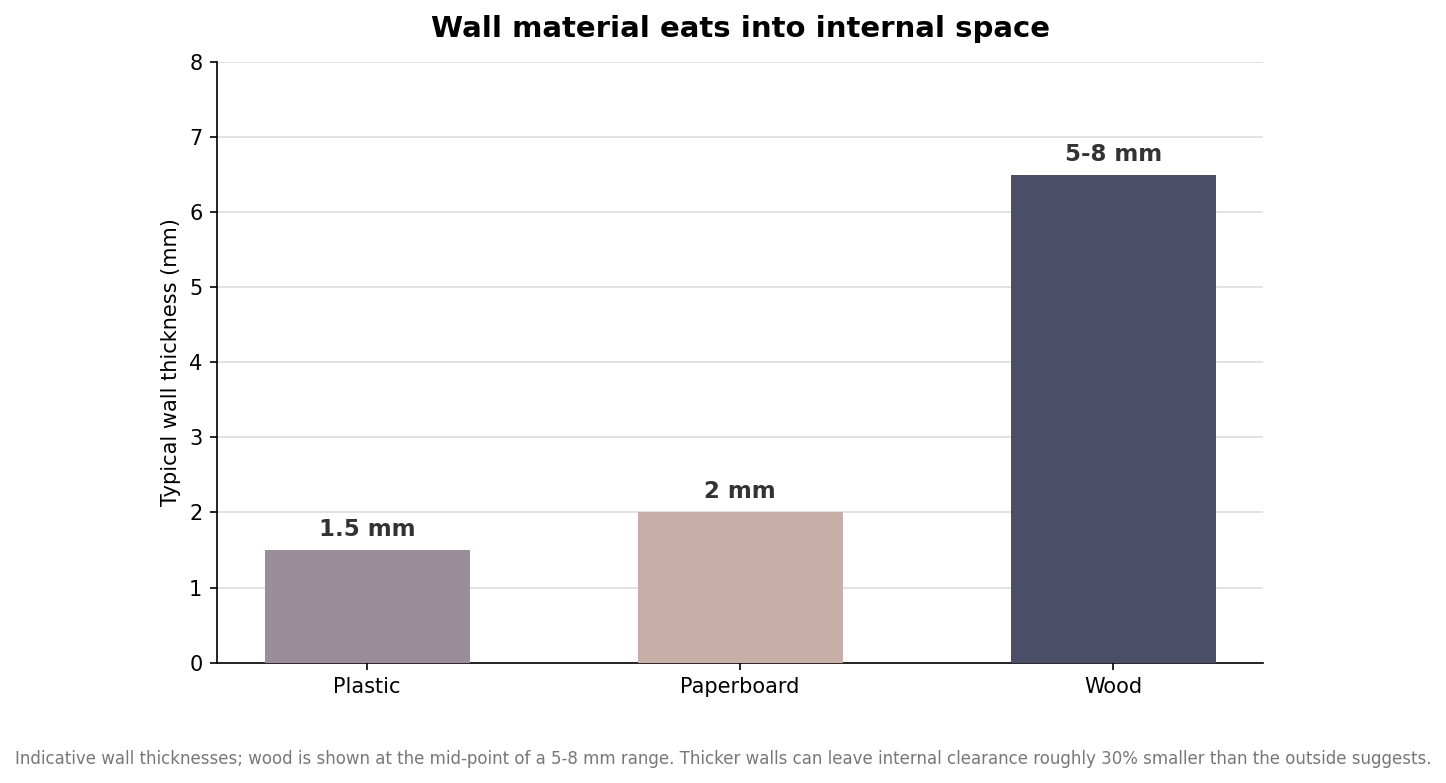
For a slim box specifically, this matters twice over, because you are already working with a tight interior. If you love the warmth of wood but need the box to stay pocketable, expect either a slightly larger exterior to claw back the lost internal room, or a design that accepts a smaller ring. Foam or a fabric-covered insert also consumes a few millimeters, so factor the insert into the clearance rather than measuring to the bare floor of the box.
Single, double, and the sizes that matter
Not every ring box is a proposal box. A single-ring format is what you want for the surprise itself, sized tightly around one ring for a clean, secret carry. A double box, commonly a longer rectangle near three inches by two, holds an engagement ring and a wedding band side by side and is meant for the ceremony or for storage afterward, not for hiding in a pocket. If your customer is a jeweler, the retail display box with its taller upright presentation is a third animal entirely, chosen to show the ring off rather than to conceal it. Matching the format to the moment prevents the classic error of buying one box and expecting it to do all three jobs.
How to choose without ruining the moment
Work the decision in this order and a slim box almost never disappoints. First, measure the ring’s full height with the stone and add roughly a centimeter of headroom; that number sets the minimum internal height, and it decides whether the ring can stand up or must lie flatter. Second, pick the material with the wall thickness in mind, remembering that a lush wood or thickly padded box eats interior room a bare plastic one does not. Third, choose the footprint for the pocket you will actually carry it in, favoring a flat rectangle for the best concealment. Only after those three are settled should you think about color, monogram, or a printed message inside the lid, because a beautiful box that either bulges or crushes the stone has failed at the one job it was bought for.
A slim ring box is a small object doing a surprisingly demanding task: vanish completely, then present a ring flawlessly seconds later. Get the internal height right for your specific stone, respect what the wall material takes away, and match the format to the moment, and you end up with a box that keeps the secret right up until the instant you want it to stop keeping it.
Leave a Reply